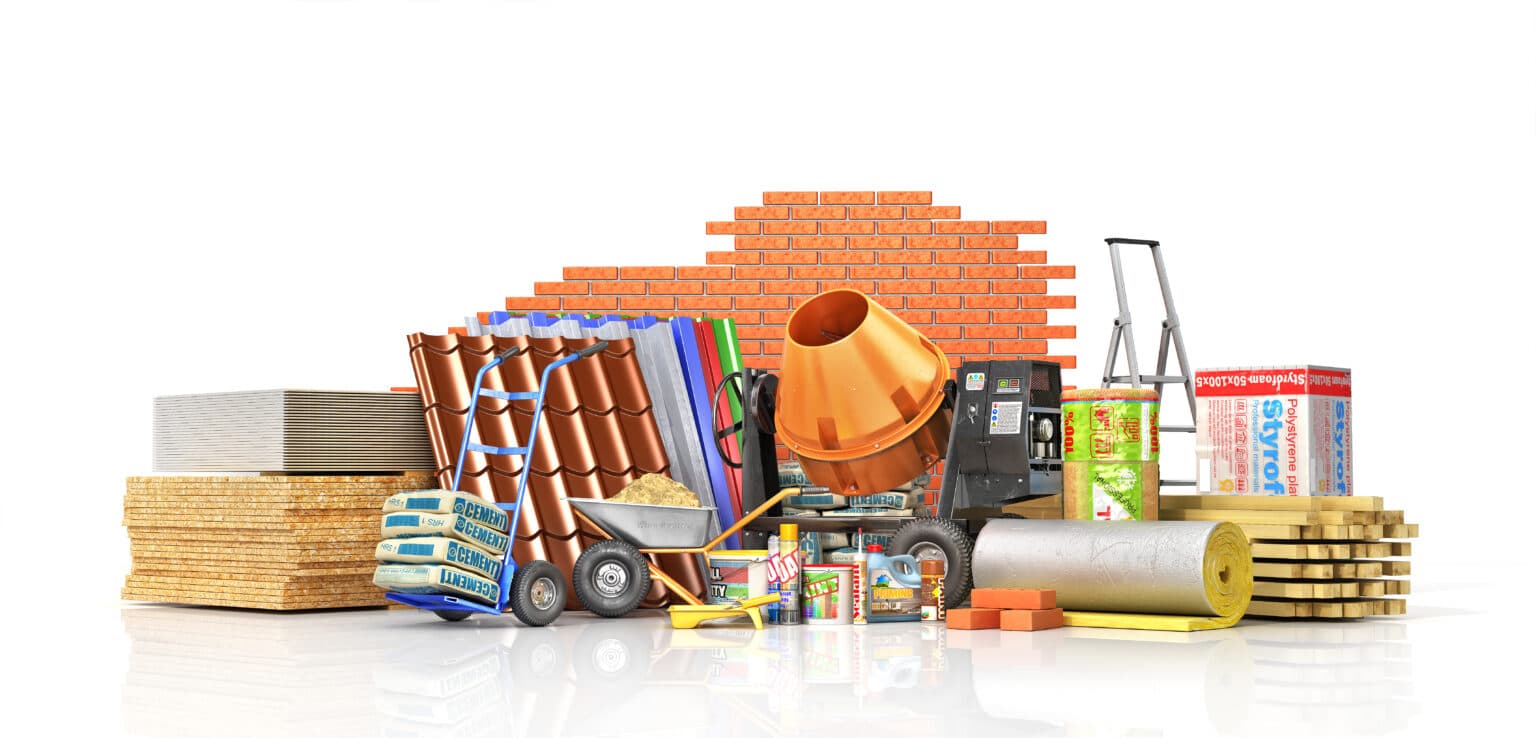
The choice of house material worries everyone who wants to build a house on the available land or buy something ready-made. All materials on the market differ in the speed of building a house, its warmth, cost, pluses / minuses and the quality of subsequent operation. And in this article we will consider them in essence.
The walls of a house are about 1 / 4-1 / 3 of its final cost. Heavy walls (brick, ceramic block) are a strong foundation, which increases the cost of construction. For a harsh winter, heavy wall material (bricks, blocks) will require good heating, and wood and SIP panels are warm options with low energy costs.
Building a wooden house
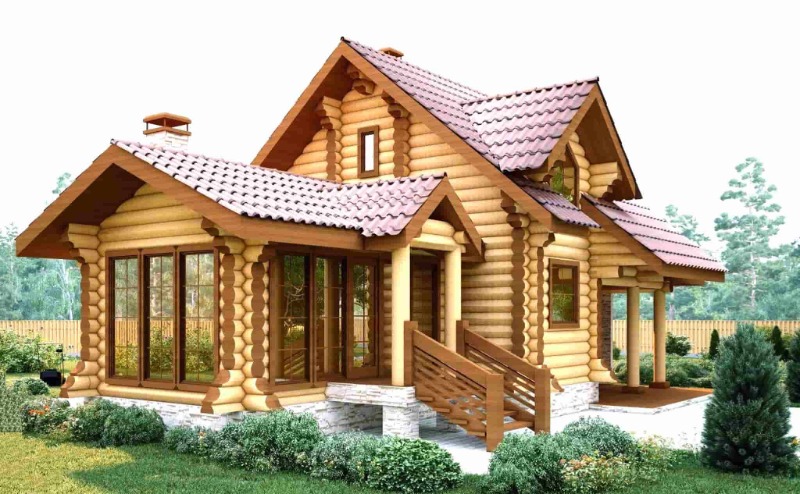
A wooden house is a more budget-friendly construction option than a brick one; it is chosen by those who want to get a warm house, in which it will be necessary to do minimal interior decoration due to the aesthetic appearance of the tree itself. Many modern (and expensive looking!) Houses of the "exclusive" public are built of timber, and its area can be made even for 2000 m2 - there would be a budget for such a colossus (as well as a desire to service it).
Physical properties of wood
The wall of a properly built house made of 200-mm timber is warmer than a 1-meter (!) Brick one, it is lighter, requires a light foundation, and in general looks eco-friendly. Wood is inferior in strength only to concrete and brick, has low thermal conductivity and high frost resistance.
Advantages of a wooden house
- Pleases the eye with a tree familiar to our eyes (especially after varnishing or painting);
- The woody aroma inside the building improves tone and mood;
- Due to the anti-corrosion and fireproof impregnation, the walls will not be eaten by insects, rodents, and in general they will not burn;
- Frost resistance (in cycles) is comparable to brick (35-100 versus 50-200);
- A box of a house of 100 m2 from a bar can be built in 3-6 months;
- The price is lower than that of stone, concrete, brick, but higher than that of lightweight concrete and SIP panels.
Disadvantages of a log house
- Large shrinkage (1.5-3 mm per 1 m) for at least a year, when no finishing work is recommended (with the exception of the most expensive laminated veneer lumber);
- High hygroscopicity (70% -90%);
- If your building is not made of glued or profiled timber, but round timber, then the slots at the joints of the ends of the logs will need to be caulked every year;
- Higher fire hazard than non-combustible walls, which is never 100% leveled even by impregnation;
- The wood rots, dries up, cracks;
- The house in 5-10 will become as if "alive": something somewhere will constantly crackle, squeal: this tree is moving in microscopic sizes.
- At the cost of building a house made of wood will differ significantly based on the type of wood (we will place it in ascending order of price): pine, spruce, linden, larch, oak, cedar.
What is the best timber to build a house from?
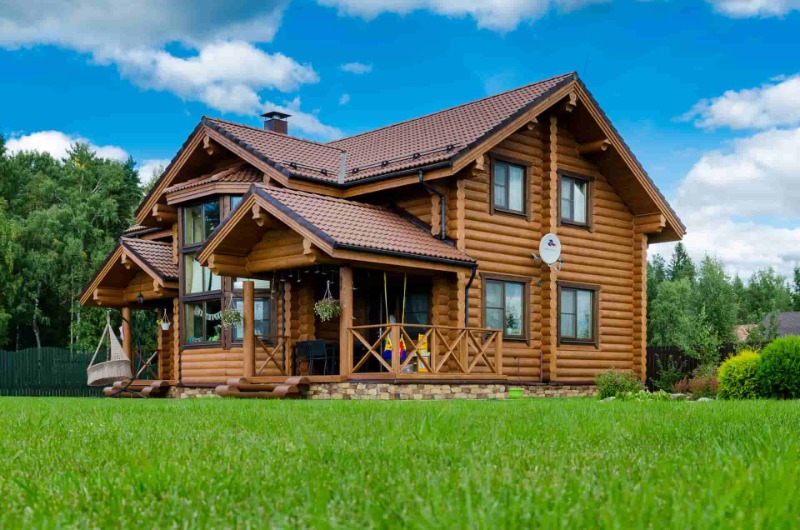
For a summer cottage, choose a 100 mm timber, for year-round use - 150-200 mm. It makes no sense to use more than 200 mm due to the higher cost, the rarity of such a diameter on the material market, the lack of additional thermal insulation compared to 200 mm, and a higher degree of natural drying out (the house will be even less quiet).
Building a brick house
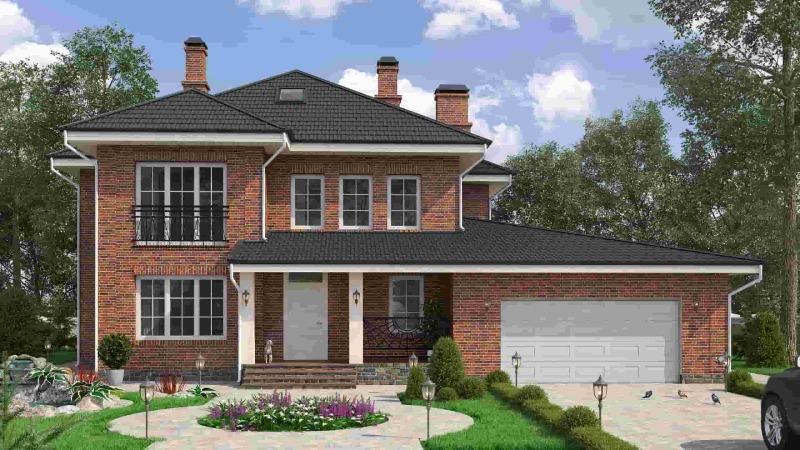
Brick is a house "for centuries", because brick walls can withstand 50-200 cycles of freezing and thawing. The architects of Egypt and Mesopotamia erected their buildings from bricks, that is, the history of its use goes back at least 5000 years. Until now, the lot of dreams of many people is a brick house - it is beautiful, looks rich, has maximum resistance to weather conditions, and your children and grandchildren can live in it, and with proper care and a mild climate, even great-grandchildren.
Physical properties of bricks
- Modern brick is made from various materials, and it happens:
- raw (unbaked clay);
- ceramic (fired clay);
- silicate (lime + quartz sand);
- hyper-pressed (Portland cement + screening of limestone rocks: marble, dolomite, shell rock ...).
- By application, they distinguish between ordinary, refractory, face, clinker and other types of bricks.
- Also, bricks differ in frost resistance, thermal conductivity, size, color, weight, hygroscopicity and hardness.
Advantages of a brick house
- It can stand up to 200 years, with a real term of problem-free operation up to 100;
- High noise insulation;
- High fire-fighting qualities;
- Wide architectural possibilities;
- Environmental friendliness;
- Excellent resistance to weather conditions;
- Decent maintenance of the microclimate in the building;
- Thanks to the huge variation in brick colors, you can build unique houses;
- You can even build multi-storey buildings thanks to its fortress - at least 20 floors;
- Since the brick has been used for a long time, it will not be difficult to find a good bricklayer, and the
- technology of working with it is perfected to the smallest detail.
Disadvantages of a brick house
- In the absence of external finishing, presentable brick laying is performed only by experienced (and
- therefore expensive) bricklayers;
- Mandatory use of insulation for external walls, otherwise, without insulation, the wall, according to the standards, should be up to 1.5 m thick;
- Slow and expensive construction;
- An expensive and powerful foundation is needed for its heavy weight;
- High hygroscopicity (40%), which leads to dampness of walls without good finishing, ventilation and heating.
SIP panel houses
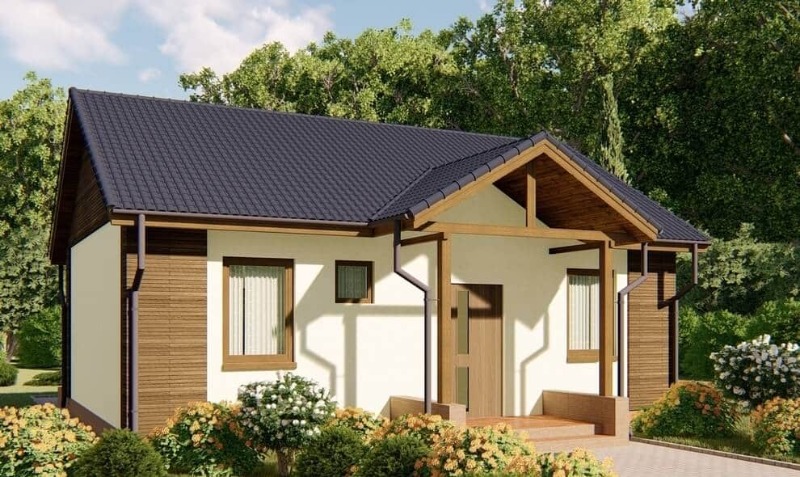
Such houses are built the fastest due to the large area of the panels - even faster than from a ceramic block (which is about 10 bricks in volume). They are popular in cold countries (Finland, USA, England, etc.), since, if you follow the technology, they are light, but warm, one of the cheapest (houses made of foam concrete, aerated concrete and cinder blocks compete with them, with undoubtedly higher quality).
Physical properties of SIP panels
SIP-panel consists of 2 layers of pressed wood (25% of the panel volume), between which there is chemically glued foamed plastic (75% of the volume). The result is a thin panel 200 mm thick.
Advantages of a house built from SIP panels
- Fast erection - the "box" is built in just 2-3 weeks;
- Maximum resistance to heat loss (low heat capacity), which means that the house can be built for regular use even at -50 ° C;
- Mice, insects, mold, fungi do not like the SIP panel, because there is nothing to profit from.
Disadvantages of SIP panel houses
- Energy efficiency is too high - it keeps all the heat inside, and therefore people are there like in a thermos, if you do not organize effective ventilation;
- This is, in fact, a wooden house that has a high natural flammability, even in spite of a serious anti-fire impregnation;
- You can not leave it without external finishing - SIP is subject to rotting. It is ideal to make a ventilated facade;
- Good waterproofing of the floor is required;
- The cost of forging walls is low, while the rest of the finishing and repair work remains the same as for other houses, that is, information about the absolute cheapness of SIP houses is a myth.
- Thin walls with a low bearing load - and therefore a maximum of 2 floors can be built from SIP panels.
Houses made of foam concrete and aerated concrete
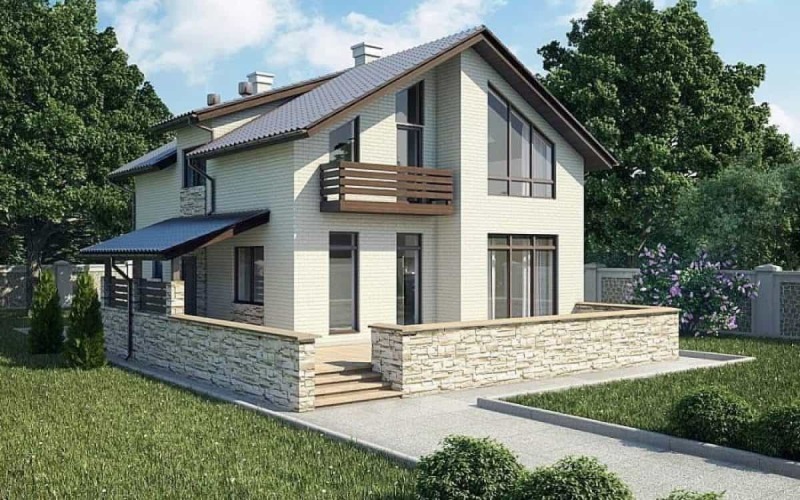
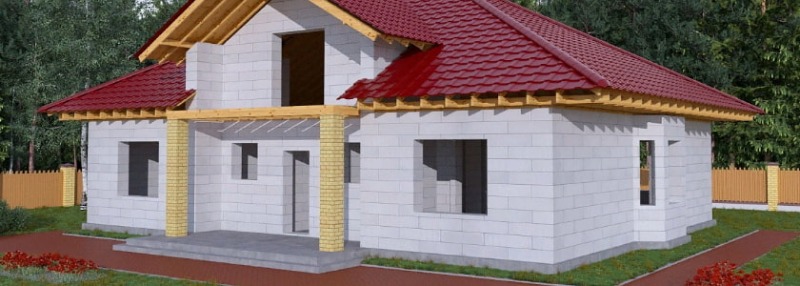
Now on the market there is a boom in the construction of houses, townhouses and "country residences" from blocks of foam concrete and aerated concrete - because this building material belongs to the budget category at a price.
Physical properties of foam concrete and aerated concrete
Advantages of a house made of foam, aerated concrete
- Foam concrete increases its strength over time - within 40-50 years after construction, the wall acquires 3-4 times higher strength than immediately after laying;
- Non-combustible materials, as they are completely composed of mineral components;
- High thermal insulation (up to 8 times better than brick) and sound insulation;
- Frost resistance - up to 50 cycles, but only from 10, and the latter can be written as a disadvantage;
- Lightweight material that does not require a strong foundation.
Disadvantages of a house made of foam, aerated concrete
- The presence of shrinkage in some cases, like that of a tree, requires a delay in finishing work for several months;
- Considering what has just been said, its high hygroscopicity (95% -100%) requires external wall decoration and protection of the inner part of the blocks from precipitation in the shortest possible time;
- It is very easy to drill, saw off, chipping away - in the process of finishing work it is easy to damage and crush the block. For the same reason, transportation requires increased care, as does loading and unloading;
- High shrinkage due to carbonization, as a result of which even cracks (along with yellowing) can appear on bare walls.
Most Frequently Asked Questions
Will it be cold in a wooden house?
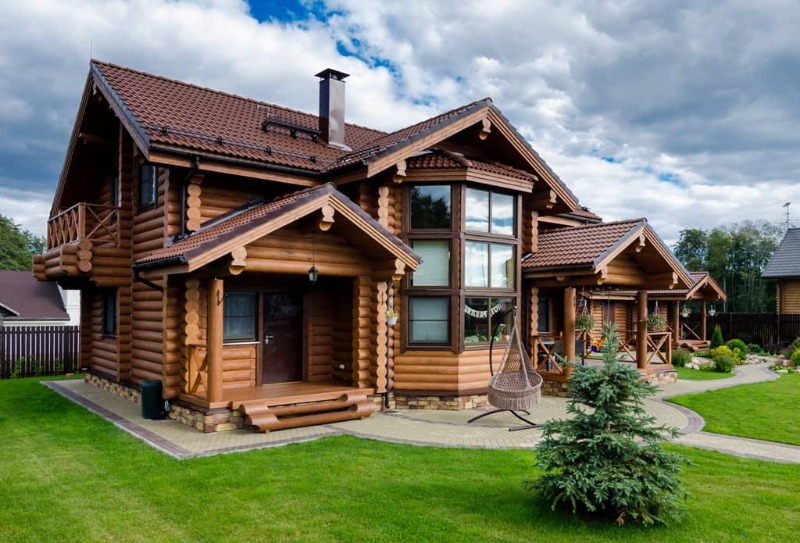
It can be as cold in it as in a house made of any other material. The reason is poor-quality insulation of walls, floors, ceilings, roofs, the presence of cracks and leaving them not caulked. In cold climates, the thickness of the floor insulation should be 150 mm, and the walls should be 100 mm. The logs of the walls should not hang on the dowel - for this you need to choose birch or oak wood (and not metal reinforcement) and putty with flax fiber. The walls and gables must be properly loaded. A high-quality construction in compliance with technology will allow you to live in a very comfortable temperature.
How to heat a wooden house?
It can be heated with all available heat sources: gas, electricity, solid and liquid fuels, stove. The heating system depends on your ease of maintenance, the possibility of automation, and whether you will live in this house all the time and what is the comfort temperature for you personally.
How does a wooden house keep warm?
The main guarantee of warmth is the absence of drafts, strong circulation of air flows from the floor to the ceiling, and high-quality insulation - Izover, Rockwool, Knauf. It is also influenced by steam and waterproofing, double-glazed windows (ideally - triple) and heavy doors "for winter". As a result, in winter, a properly built wooden house will be warm, like the rest.
How much does it cost to build a house out of wood?
To expel the box itself from a profiled bar 100 (150) * 150 will cost from 250 to 500 thousand UAH. (considering options 50-100 m2). This includes frame-panel partitions, insulation (Izover, Rockwool, Knauf), vapor barrier (Izospan) and a staircase to the 2nd floor. The foundation, as for brick houses, is not needed for such a structure and it is made of supporting-columnar concrete blocks. In addition, there will be a roof (Ondulin or metal tiles are suitable), interior decoration, window-doors. For this add at least 300-500 thousand. Everything that you put inside (furniture, appliances, heating) is at your request and price. Result: from 550 to 800 thousand UAH. minimum. If you build the first floor from a bar, and the second - using frame-panel technology with Euro-clapboard cladding, then the price of the box will be 20% -40% less. If all the interior decoration is made of lining (needles or deciduous), it will come out cheaper. To be realistic, proceed from 1 million hryvnia (the material of the timber is pine).